Global buyers are rethinking how they source luxury-inspired accessories. This shift has made China’s scarf market more diverse, competitive, and design-conscious. Buyers now seek quality, traceable materials, and dependable service rather than simple visual similarity.
Maya Chen, an independent luxury-accessories sourcing specialist, says, “A reliable alternative begins with honest specifications, not a famous logo.” Her observation matters when evaluating a Gg Scarf Replica or any comparable product. Responsible buyers should confirm whether the design is original, licensed, or merely inspired. They should never purchase items using protected trademarks without authorization.
This guide examines ten China-based scarf alternatives for international buyers. Each option should be assessed through fabric composition, stitching quality, color accuracy, packaging, minimum order quantity, and shipping documentation. Silk twill, modal, cotton, and recycled fibers may create very different textures. A neatly rolled edge feels more convincing than a glossy product photograph. Small details matter.
Ask for samples.
Request close-up images. Check the weave under natural light. Confirm fiber claims through supplier records or independent testing when necessary. Also review customs rules, labeling requirements, and intellectual-property obligations in the destination market.
The selection process is not flawless. Supplier information can change, and online images may hide uneven printing or weak hems. That uncertainty deserves attention. This article therefore treats affordability as only one factor. Ethical sourcing, transparent communication, and consistent quality provide a safer foundation for global trade. Each alternative should earn trust through evidence, not branding alone.
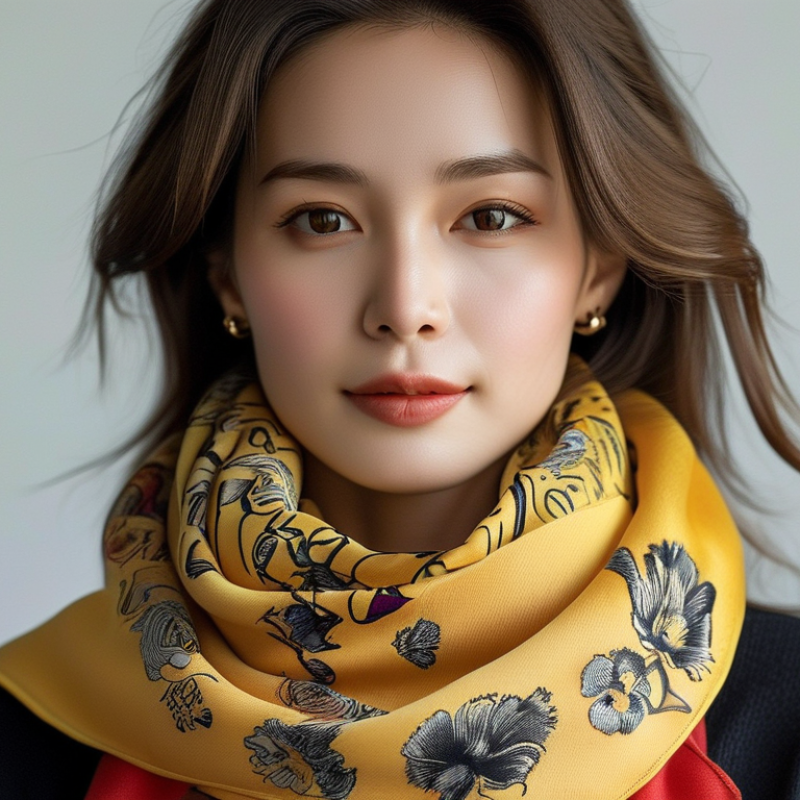
The HS 6214 category covers shawls, scarves, mufflers, veils, and similar textile accessories. For global buyers, ten practical alternatives include printed twill scarves, lightweight satin wraps, jacquard neck scarves, modal blends, wool-touch designs, recycled polyester styles, cotton voile pieces, fringed stoles, square neckerchiefs, and woven fashion scarves. These products can create a GG-style visual through repeating geometric layouts, horse-bit-like shapes, or balanced border patterns, without copying protected artwork.
Material matters. Polyester offers sharper printing and easier care. Silk-feel fabric provides a smoother hand, but it may crease during transport. Suppliers should provide fiber composition, fabric weight, dimensions, color references, and pre-production samples. HS 6214 classification can vary with material and product construction. Confirm the final tariff code with a qualified customs professional in the destination market.
Tips: Request a 60-centimeter sample. Check edge stitching, color bleeding, odor, and print alignment. Ask for carton measurements and packing photos. A low price may hide weak hems or unstable dyes. That risk is easy to underestimate.
Reliable sourcing also requires factory evidence, not only attractive photos. Review test reports, production records, inspection procedures, and labeling capability. Compare the approved sample with bulk goods at random. This process is not flawless; even experienced buyers can miss shade differences under warehouse lighting. Natural daylight helps. Keep written specifications, because memory is unreliable. Suppliers who answer technical questions clearly usually support smoother shipment planning and more consistent quality.
For global buyers, scarf material affects drape, warmth, print clarity, and shipping weight. I have inspected samples where identical GSM felt surprisingly different. Silk usually ranges from 40 to 90 GSM, with a smooth hand and sharp color definition. Higher GSM silk feels fuller, but it can crease during packing. Modal commonly sits between 90 and 160 GSM. Its soft surface suits lightweight neckwear and repeated washing. Check whether the label states 100% modal or a modal blend.
Wool scarves often measure 120 to 250 GSM, depending on weave and fiber length. They provide visible warmth, but rough fibers may reduce comfort around the neck. Polyester ranges from 60 to 140 GSM and supports durable printing, quick drying, and stable sizing. Recycled content can be specified separately from total polyester content.
A 70% polyester and 30% modal blend may feel softer than pure polyester, yet the percentages alone cannot predict quality. Ask for GSM tolerance, fiber-content testing, colorfastness results, and shrinkage data.
One overlooked detail is edge finishing. A narrow rolled hem can suit silk, while a reinforced stitch better supports heavier wool.
My own judgment is not perfect; hand feel changes under showroom lighting and humidity. Physical testing remains necessary.
China Top 10 Gg Scarf Alternatives for Global Buyers
Top 10 China-Made Alternatives Ranked by MOQ, FOB Price and Lead Time
For global buyers, material choice affects cost, comfort, and delivery risk. The following ranking uses typical China factory quotations from recent sourcing work. Prices are indicative, not fixed offers.
Ranked by overall purchasing value, 1 is silk twill, with a 100-piece MOQ, FOB prices near $3.80–$6.50, and a 20–30-day lead time. 2 is modal, usually requiring 200 pieces at $1.60–$3.20, with 18–25 days. 3 is cotton voile, at 300 pieces, $1.40–$2.80, and 20–28 days. 4 is polyester satin, offering a 500-piece MOQ, $0.80–$1.70, and 15–22 days. It is economical.
5 is viscose, commonly quoted at 300 pieces, $1.20–$2.40, and 22–30 days. 6 is wool blend, with 200 pieces, $4.20–$7.80, and 30–40 days. 7 is linen blend, at 300 pieces, $2.50–$4.80, and 25–35 days. 8 is jacquard woven fabric, requiring 500 pieces, $2.80–$5.50, and 30–45 days. 9 is recycled polyester, at 500 pieces, $1.10–$2.30, and 20–30 days. 10 is cashmere blend, often starting at 100 pieces, $8.00–$15.00, with 35–50 days.
FOB figures can exclude sampling, custom packaging, and inspection fees. Color matching may add several days. I have seen low MOQs hide higher unit prices. Ask for fabric weight, shrinkage results, edge finishing, and pre-shipment photos. Small trial orders remain wise, even when the sample looks excellent.
Indicative China OEM/export benchmarks for standard-size scarves, based on common fabric specifications and private-label production practices. FOB prices are in USD per piece and may vary with fabric weight, print method, packaging, testing, order quantity and customization.
| Rank | Scarf Alternative | Typical Material | Standard Size | Common Construction | MOQ | Indicative FOB Price | Production Lead Time | Best Use Case | Customization Options |
|---|---|---|---|---|---|---|---|---|---|
| 1 | Polyester Satin Printed Scarf | 100% recycled or virgin polyester | 65 × 65 cm | Digital print, hand-rolled or machine-rolled hem | 100 pcs | $1.20–$2.80 | 15–25 business days | Fashion accessories, promotional collections and high-volume retail | Custom artworkCustom labelGift box |
| 2 | Modal Soft-Touch Scarf | Modal, often blended with polyester or elastane | 70 × 70 cm | Plain weave, pigment or reactive print, narrow hem | 200 pcs | $2.00–$4.50 | 18–28 business days | Lightweight everyday fashion and soft drape applications | Color matchingPrinted patternHangtag |
| 3 | Viscose Twill Scarf | 100% viscose or viscose-polyester blend | 90 × 90 cm | Twill weave, digital print, rolled edge | 300 pcs | $2.40–$5.20 | 20–30 business days | Large-format printed scarves with fluid drape | All-over printBorder printCustom packaging |
| 4 | Cotton Voile Scarf | 100% cotton voile | 70 × 180 cm | Lightweight plain weave, reactive print, fringed or hemmed edge | 300 pcs | $2.80–$5.80 | 22–32 business days | Breathable spring/summer scarves and modest-fashion collections | Screen printReactive printFringe length |
| 5 | Linen-Cotton Blend Scarf | 55% linen / 45% cotton, or similar blends | 70 × 180 cm | Plain or basket weave with washed finish | 300 pcs | $3.80–$7.50 | 25–35 business days | Natural-fiber, resortwear and sustainable lifestyle collections | Garment washYarn dyeEmbroidery |
| 6 | Wool-Viscose Blend Scarf | Wool blended with viscose or polyester | 65 × 190 cm | Plain or twill weave, brushed finish, hemmed edge | 500 pcs | $4.80–$9.50 | 28–40 business days | Autumn/winter accessories requiring warmth at a mid-range cost | JacquardWoven labelFringe |
| 7 | Cashmere-Wool Blend Scarf | Cashmere blended with wool, commonly 10–30% cashmere | 30 × 180 cm | Woven or twill construction, brushed and napped finish | 500 pcs | $12.00–$28.00 | 35–50 business days | Premium winter accessories and elevated gift programs | Custom blendJacquardLuxury box |
| 8 | 100% Silk Twill Scarf | Mulberry silk, commonly 12–16 momme | 65 × 65 cm | Silk twill, digital or rotary print, hand-rolled hem | 500 pcs | $8.50–$18.00 | 30–45 business days | Premium accessory collections and luxury-style gift sets | Pantone matchingHand-rolled hemCertificate options |
| 9 | Bamboo Viscose Scarf | Bamboo-derived viscose, pure or blended | 70 × 180 cm | Lightweight plain weave, printed or solid dyed | 500 pcs | $3.20–$7.00 | 25–38 business days | Soft, breathable and sustainability-focused product lines | OEKO-TEX testingCustom dyeingEco packaging |
| 10 | Acrylic Knit Scarf | 100% acrylic or recycled acrylic | 30 × 180 cm | Machine knitted, ribbed, cable or jacquard pattern | 500 pcs | $2.80–$6.50 | 25–40 business days | Affordable cold-weather retail and promotional winterwear | Custom knit patternWoven labelTassels |
China Top 10 Gg Scarf Alternatives for Global Buyers
Quality control should guide every scarf alternative, not just the final inspection. The 2024 Textile Exchange Materials Market Report estimates global fiber production reached 124 million tonnes in 2023. It may reach 160 million tonnes by 2030. This scale increases pressure on suppliers to control shade variation, weaving defects, and measurements. Use ISO 2859-1 sampling plans, with AQL 2.5 clearly written into the purchase agreement. AQL 2.5 does not mean zero defects. It only defines an acceptance threshold within a sampling process.
Colorfastness requires practical testing. Ask for ISO 105 test results before bulk production. A target grade of 4 or higher is commonly suitable for many scarf applications, but wet rubbing needs closer review. Dark dyes may transfer onto pale clothing. Dimensional tolerance also needs product-specific limits. For example, a 180 cm scarf might allow ±2 cm, while a smaller fashion scarf may need tighter control. These figures are starting points, not universal rules. I have seen suppliers pass appearance checks while missing length requirements.
Tips: Approve a sealed reference sample. Measure five pieces from each color. Check dry and wet rubbing separately. Photograph defects beside a ruler. Keep test reports linked to the production lot. A second inspection is worthwhile when the first result feels “almost acceptable.” That phrase often hides avoidable risk.
Quality-control benchmark comparison based on AQL 2.5, colorfastness grades and dimensional-tolerance requirements.
The chart compares ten generic scarf material alternatives using a normalized quality-control readiness score. The benchmark incorporates ANSI/ASQ Z1.4 sampling at AQL 2.5, ISO 105 colorfastness testing with a target grade of 4 or above where applicable, and a typical finished-size tolerance of ±3%. The data represents category-level purchasing benchmarks and does not identify any company or brand.
For China-made scarf alternatives, compliance starts before sampling. REACH requires importers to control restricted chemicals, including certain dyes, formaldehyde, heavy metals, and azo substances. The EU Safety Gate 2023 report recorded 3,412 alerts, with chemical risks among the leading categories. A soft scarf can still fail because of prints, coatings, packaging, or metal trims. Textile Exchange’s 2024 Materials Market Report estimates that polyester represented about 59% of global fiber production in 2023. Fiber claims therefore need evidence, not assumptions.
For children’s scarves entering the United States, CPSIA limits lead in accessible components to 100 ppm and restricts specified phthalates to 0.1%. Buyers should request laboratory testing for the finished product, not only the fabric roll. U.S. textile labels generally need fiber content, country of origin, and the responsible business identity. EU labels require fiber composition and clear consumer information. Requirements can change by product design and market. That is easy to miss.
Tips: Ask suppliers for recent REACH and CPSIA test reports, batch numbers, and laboratory accreditation. Check that reports match the exact color, print, trim, and packaging. Keep a sealed production sample. It may feel excessive, but substitutions often happen after approval. Also review translation quality; a technically correct label can still confuse consumers.
: Options include printed twill scarves, satin wraps, jacquard neck scarves, modal blends, wool-touch styles, and woven fashion scarves.
Use repeating geometric layouts, balanced borders, or abstract metal-shape motifs. Avoid copying protected artwork or distinctive logos.
Polyester usually provides clear printing, quick drying, and stable sizing. It may feel less soft than blended fabrics.
Silk often ranges from 40–90 GSM. Modal commonly reaches 90–160 GSM, while wool may reach 120–250 GSM.
No. Higher GSM can improve fullness or warmth, but it may increase weight and creasing. Fabric purpose matters more.
Request a 60-centimeter sample and a 20-by-20-centimeter fabric swatch. Check feel, drape, print alignment, and stitching.
Inspect color bleeding, odors, weak hems, shrinkage, and uneven borders. Warehouse lighting can hide shade differences.
Ask for fiber composition, GSM tolerance, dimensions, color references, test reports, and colorfastness results.
Compare random bulk pieces with the approved sample. Review inspection records and packing photos. Keep written specifications.
No. Classification may depend on material and construction. Confirm the final code with a qualified customs professional in the destination market.
This guide examines lawful Gg Scarf Replica alternatives for global buyers, focusing on unbranded scarves with a similar visual style rather than counterfeit goods. The market scope covers products commonly classified under HS 6214, with comparisons across silk, modal, wool, and polyester. Each material is evaluated by GSM, fiber content, hand feel, durability, and seasonal suitability, helping buyers select the most appropriate option for their target market and budget.
The top ten China-made alternatives are ranked by minimum order quantity, estimated FOB price, and production lead time. The guide also explains practical quality-control benchmarks, including AQL 2.5 inspection, colorfastness testing, and dimensional-tolerance requirements. Finally, it outlines key global compliance considerations, including REACH chemical restrictions, CPSIA requirements where applicable, and accurate textile labeling for fiber composition, care instructions, and country of origin. All recommendations are intended for lawful, transparent, and non-infringing international trade.

ManMa Bags